Services · 01
Koi Ponds & Water Gardens
A koi pond is a closed ecosystem you are asking to hold clear water through a North Texas August, and that happens in the plumbing and the biology long before it happens in the stone. We build at 3 to 5 feet of working depth, move the entire volume through mechanical and biological stages sized to the fish load, and set the perimeter so no liner ever reads from the terrace.
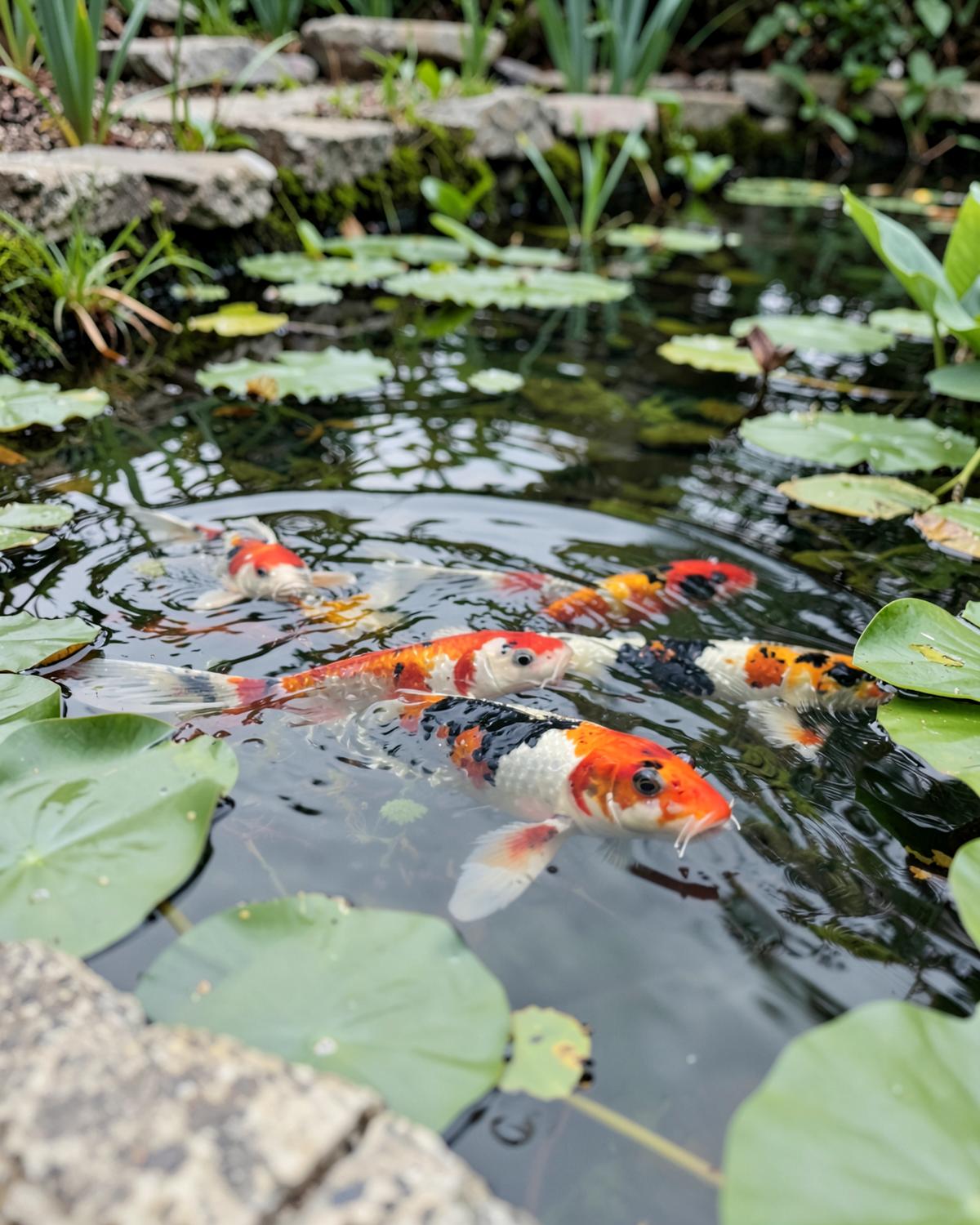
What the build includes
- Excavation to 3–5 ft of working depth for stable temperature and fish safety
- Bottom drain, mid-water intake and surface skimmer on separate returns
- Mechanical settlement ahead of biological media, sized to the fish load
- Aeration specified for August, not for April
- Hand-set boulder edge with hidden liner terminations, bedded on compacted base
- Planting shelves, aquatic plants and full ecosystem cycling before handover
- Predator strategy, low-voltage lighting and controls
- HOA submittal packet and city verification during design
At a glance
- Typical volume
- 2,500–12,000 gallons
- Typical depth
- 3–5 ft
- Typical build window
- 3–6 weeks
- Typical investment
- $28,000–$80,000+
Every project is different. Access, ground conditions, working depth, stone selection and scope all move both the price and the schedule — these are typical ranges from past Dallas–Fort Worth builds, not a quote. We give you a firm number after a site visit.
Request a ConsultationAlso from the studio
Pondless Waterfalls
Moving water without open water. A hidden reservoir and graded streambed give you sound and motion at the pati…
03Custom Water Features
Sheet weirs, basalt columns, spill walls and courtyard basins detailed to the architecture of the house — conc…
04Maintenance & Restoration
Seasonal service for ponds we built and ponds we inherit: water chemistry, filtration overhauls, algae correct…
A koi pond is a closed ecosystem you are asking to hold clear water through a North Texas August, and that happens in the plumbing and the biology long before it happens in the stone. We build at 3 to 5 feet of working depth, move the entire volume through mechanical and biological stages sized to the fish load, and set the perimeter so no liner ever reads from the terrace.
What makes a koi pond different from a garden pond?
Depth and filtration capacity. A garden pond is a planted feature that happens to hold water; a koi pond is a life-support system for animals that can live thirty years and reach two feet long. The fish load is what everything else is sized against.
In practice that means three things a garden pond does not need: real working depth so the water does not track the air temperature, solids handling so waste leaves the system instead of breaking down in it, and biological volume large enough to process the ammonia that a stocked pond actually produces in August.
Nearly every failed pond we are called to was not built wrong so much as filtered wrong.
How deep should a koi pond be in Dallas–Fort Worth?
Three to five feet of water over the deepest point. In colder climates depth is about not freezing; here it is about not cooking. Warm water holds less dissolved oxygen at exactly the moment every biological process in the pond speeds up, so volume at depth is what buys you stability through a run of 100-degree afternoons.
Working depth means water, not the hole. A four-foot excavation with a foot of gravel and rock in the bottom is a three-foot pond, and it will behave like one in July.
How does the filtration actually work?
In stages, each doing a different job, on separate returns rather than one pump trying to do everything.
- 01A bottom drain pulls settled solids from the deepest point, where they collect — this is the single component most budget builds omit, and it is why those ponds need draining to clean.
- 02A mid-water intake and a surface skimmer take floating debris before it sinks and starts rotting into ammonia.
- 03Mechanical settlement drops the solids out of suspension before they reach the biology.
- 04Biological media, sized to the fish load, converts ammonia to nitrite to nitrate.
- 05Aeration keeps dissolved oxygen up through the worst of the summer, when the fish and the bacteria are competing for it.
Ask any builder for the biological capacity in gallons and the turnover rate. Brand names are not a specification.
What does the ground do to the build?
| Where | Ground | What it changes |
|---|---|---|
| Dallas, Plano, Frisco, McKinney, Allen | Blackland Prairie clay | Machine hours at both extremes; edge must be bedded on compacted base or it moves |
| Denton, Argyle, Flower Mound, Grapevine | Cross Timbers sand | Fast digging, battered sidewalls, underlayment discipline |
| Fort Worth, Keller, Westlake | Limestone near surface | Test hole before layout; sometimes a raised feature beats excavating |
This is the line item that varies most between two otherwise identical ponds twenty miles apart, which is why we will not quote a pond without seeing the site.
How much does a koi pond cost?
Typically $28,000 to $80,000 and up in Dallas–Fort Worth. The spread is working depth, filtration capacity, and how much stone is moved and set by hand.
Every figure on this page moves with the project. Access, ground conditions, depth, stone selection and scope all change both the price and the schedule — these are ranges from past builds, not a quote. We give a firm number after a site visit.
What happens during the build?
- 01Site visit — grade, sun, access, drainage, and where you actually sit in the garden.
- 02Design and specification, with the HOA packet prepared in parallel so approval does not delay the dig.
- 03Excavation and plumbing — drains, returns and equipment location set before any stone.
- 04Liner, underlayment and the structural edge.
- 05Stonework, hand-set with hidden terminations.
- 06Filtration commissioning, planting, fill and cycling.
- 07Fish introduced only once the biology is stable, not on handover day.
Do you need a fence or a permit for a koi pond in Texas?
State pool-enclosure law does not reach single-family homes — Health and Safety Code §757.002 scopes chapter 757 to multiunit rental complexes and property owners associations. What binds a homeowner is the municipality's adopted residential code and the HOA covenants, and those differ across the Metroplex.
Electrical is the near-universal permit item: a pump, transformer and low-voltage lighting mean a licensed run and an inspection regardless of how the water is classified. We confirm the current position with your city during design.
Common questions
- How long do koi live in a properly built pond?
- Decades. Twenty to thirty years is normal in a pond with real depth, stable water and filtration sized to the load — which is why the build specification matters more here than in any other kind of water feature.
- How many koi can the pond hold?
- Fewer than most people expect, and the honest number depends on biological capacity rather than gallons. We size filtration to the stocking level you actually want, then tell you what that pond will comfortably carry.
- Can a koi pond be built on a small lot?
- Yes, and depth matters more than footprint. A compact pond at four feet outperforms a large shallow one in a Texas summer.
- How often does a koi pond need cleaning?
- A full clean-out is typically annual, in spring. With a bottom drain and correctly sized filtration, the rest of the year is servicing media and managing debris, not draining the pond.
- Do you service ponds you did not build?
- Yes. The first visit is a diagnosis of the existing system — inherited ponds usually have one specific undersized component rather than a general problem.
- Will a koi pond attract mosquitoes?
- A moving, filtered, stocked pond is among the worst mosquito habitats there is — the surface is disturbed and the fish eat larvae. Standing, unfiltered water is the problem, which is the opposite of what we build.
Start a Project
Tell us about the property.
Consultations are on site and typically an hour. You'll leave with a realistic budget range and no obligation.